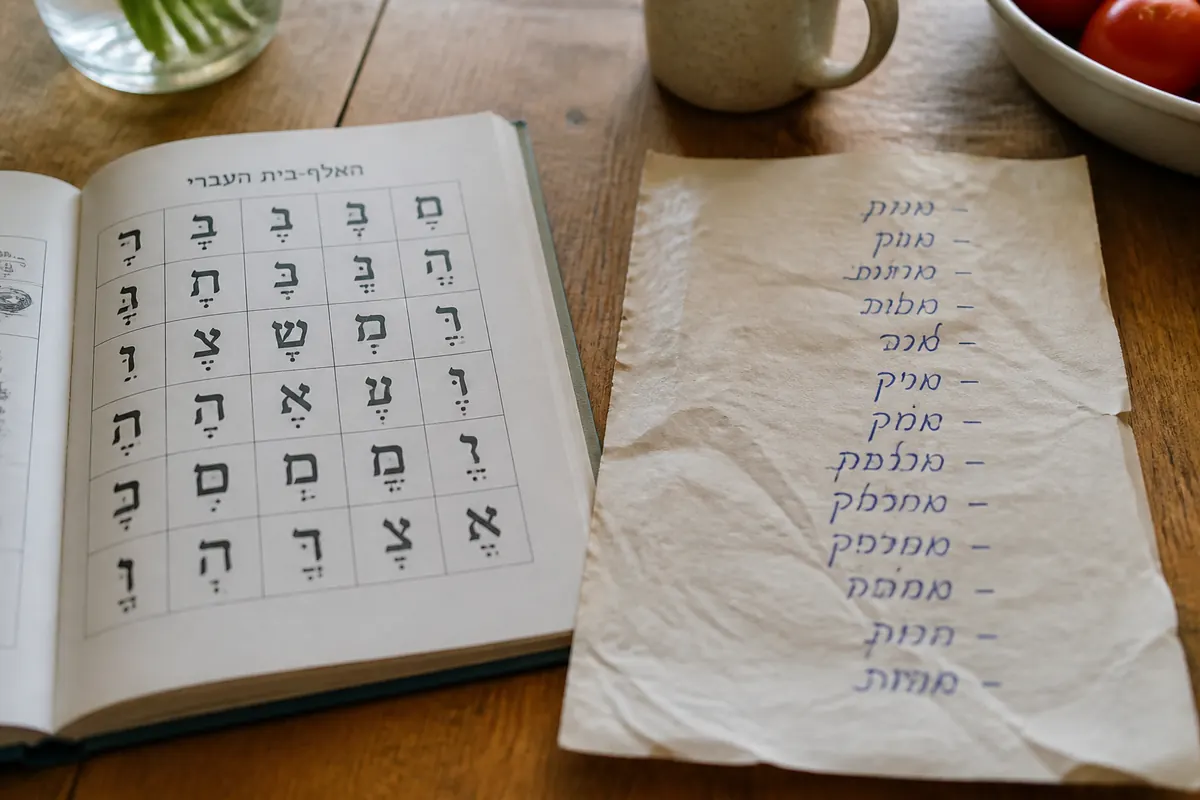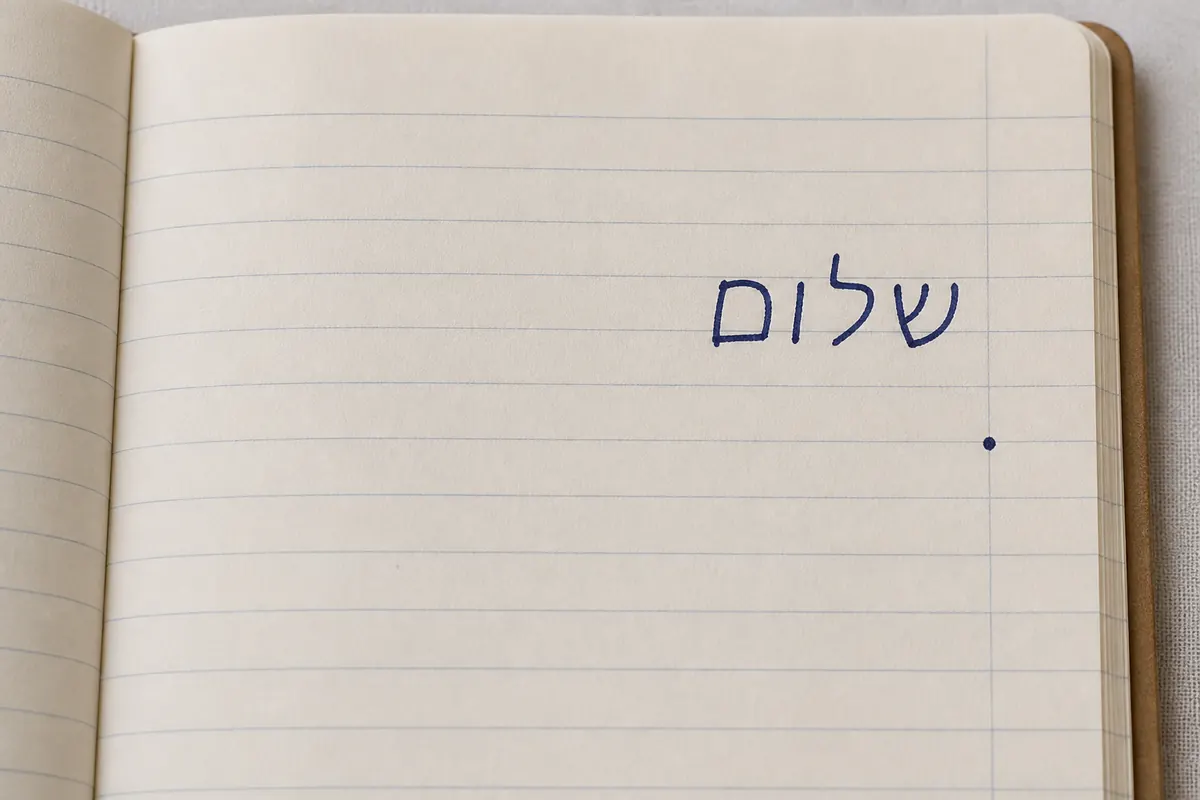
English taught my hand a superstition: important things begin on the left. Hebrew does not care. The first letter of שלום sits on the right. I knew that as trivia. My hand did not.
The tell
I would write shin in the middle of the page, then try to put lamed to its right, remember the rule, panic, and squeeze mem into a gap that did not exist. The word looked like it had been in an accident.
Or I started on the left anyway, like a title, and produced Hebrew that a teacher would technically accept and an Israeli would side-eye.
The only cue that worked
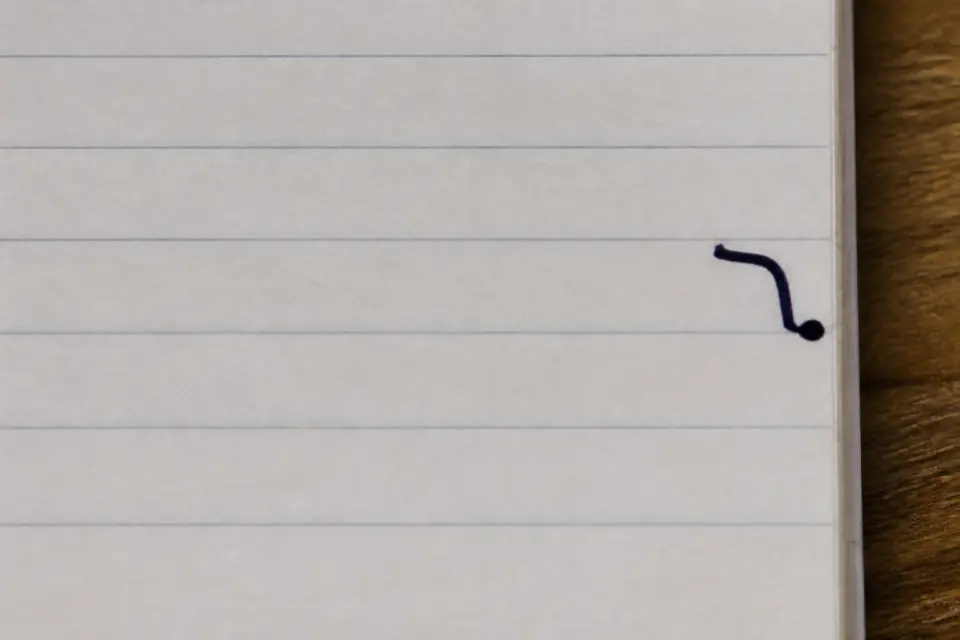
Before any letter, I put a dot on the right side of the line. That dot is where the first letter’s right edge belongs. Not the centre. Not “where it looks balanced.”
Then I write letter one. Then I move left. I do not re-centre after letter two. Re-centring is how English sneaks back in.
On a screen I do the same thing: I start the trace on the right of the box. If the UI wants a centred glyph, that is a display choice. My stroke still begins where the letter begins.
Stroke order is not the same question
People mash two ideas together. Direction of the word is right to left. Direction of a stroke is whatever that letter needs. Lamed goes up. Samekh is a loop. If I force every stroke to travel west, aleph becomes a scribble.
I learn one letter’s path as a path. I learn the word as a sequence of those paths laid down from the right.
Lined paper helps more than I wanted to admit
Blank paper invited me to wander. A line gives the letter a floor. Hebrew print especially wants to sit on that floor. My early letters floated like they were ashamed to commit.
I still use a line. I am not too advanced for a line. Neither is anyone who grew up on notebooks.
If RTL still feels like a costume
Write one word a day on the back of a receipt, starting from the right edge even if it looks lonely there. Lonely on the right is correct. Crowded in the middle is English in a Hebrew coat.
I stopped feeling fake when my hand reached for the right margin without a lecture. That took more receipts than articles. This article is the lecture. The receipt is the work.
Frequently Asked Questions
Quick answers to common questions.
The word goes right to left. Inside a letter, you still follow that letter’s stroke order, which is not always R-to-L. I ruined aleph by dragging it like an English A.
Related Articles
View All →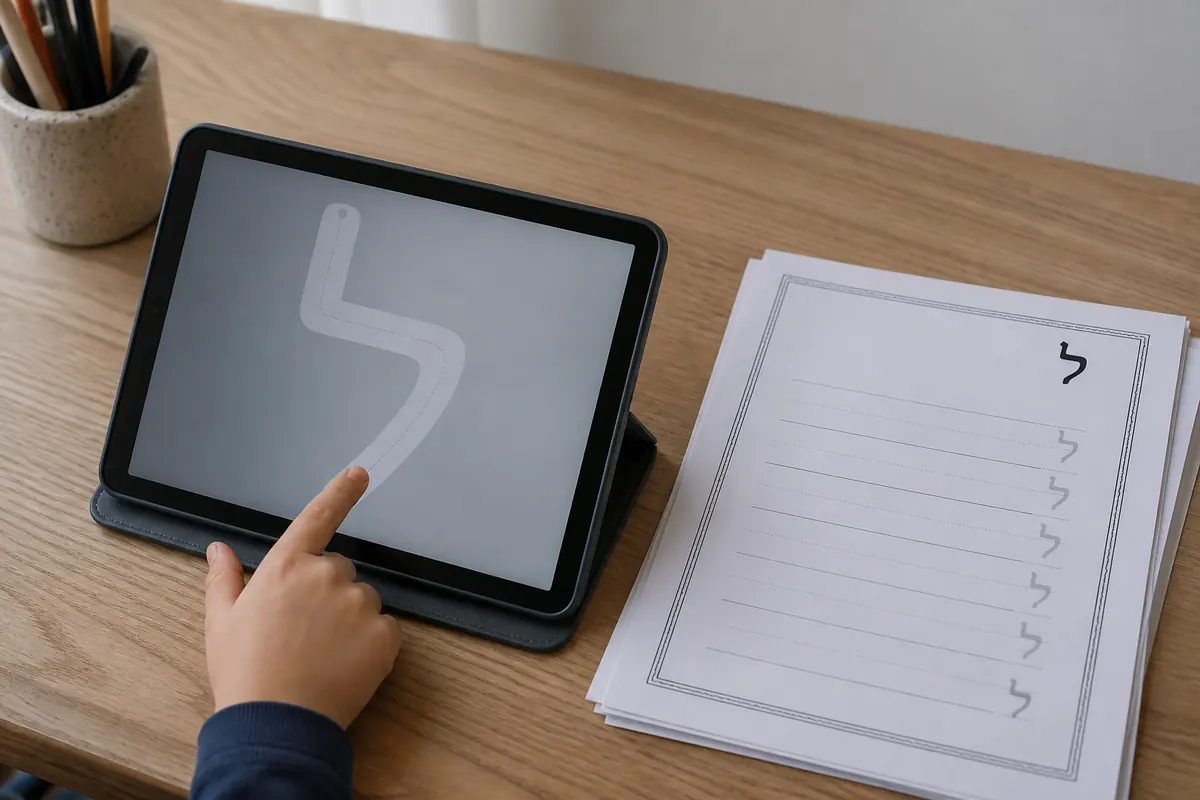
Workbooks didn't stick. Tracing the letter on a screen did.
I could sound out Hebrew. I still couldn't write a letter.